Key takeaways
- LSR is a two-part, platinum-cured silicone elastomer that stays a clear low-viscosity liquid until heated.
- Addition curing at 120–150 °C forms a dense 3D network with very low shrinkage (≤0.1%) and no by-products.
- It performs from −50 °C to 200 °C, meets FDA / USP Class VI / ISO 10993, and molds micron-level detail.
- Choose grades by safety class, hardness (Shore A), service temperature and transparency.
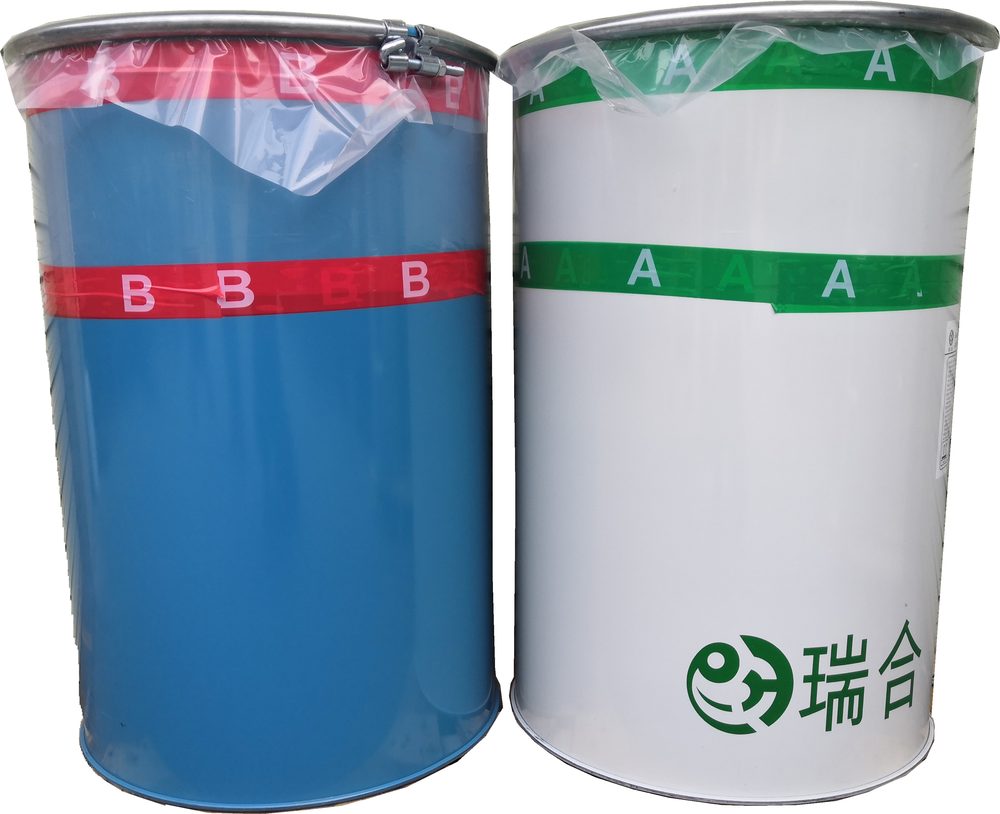
Liquid Silicone Rubber (LSR) is a high-purity, platinum-cured silicone elastomer supplied as a two-component system. At room temperature it behaves as a clear, low-viscosity liquid split into Part A and Part B; once mixed and heated it cures into a tough, resilient rubber. Thanks to its biocompatibility, wide service range and precision moldability, LSR has become a mainstream material across medical, food-contact, automotive, electronic and consumer manufacturing.
Chemical structure and curing mechanism
LSR is built on a stable silicon–oxygen (Si–O) backbone with methyl side groups, repeating as –[Si(CH₃)₂–O]–. Unlike peroxide systems, LSR uses a platinum-catalyzed addition cure that releases no volatile by-products. When Parts A and B are metered, mixed and heated to 120–150 °C, the vinyl and hydride groups cross-link rapidly into a dense three-dimensional network.
This mechanism delivers extremely low shrinkage (≤0.1%) and, for most grades, eliminates the need for secondary post-curing — preserving purity and satisfying strict medical and food-contact requirements.
Key properties of LSR
- High transparency and purity — odorless, non-toxic and clean; compliant with FDA, USP Class VI and ISO 10993 for direct body and food contact.
- Wide temperature range — stable elasticity from −50 °C to 200 °C, resisting both extreme cold and sustained heat.
- Strong mechanical performance — hardness from 5 to 80 Shore A with high tear strength, elongation and resilience.
- Weather and chemical resistance — withstands water, ozone, UV and common acids/bases without yellowing or aging.
- Electrical insulation — high dielectric strength for sealing and insulating electronic components.
- Precision fluidity — low viscosity fills intricate molds for burr-free, micron-accurate parts.
Main applications
Medical and healthcare
Its purity and biocompatibility make LSR ideal for pacifiers and infant-care items, catheters, syringe seals, respiratory masks, wound dressings and soft surgical components.
Automotive and engineering
LSR seals engine gaskets and weatherstripping under heat and pressure, protects sensors and ignition parts from moisture, and damps vibration to extend assembly life.
Consumer goods and food contact
Food-grade LSR is used for bakeware, kitchen utensils, bottle accessories and soft-touch grips that must be non-leaching, hygienic and easy to clean.
Electronics
As an encapsulant and waterproof seal, LSR protects sensors and circuits from moisture and chemicals, and forms durable, tactile silicone keypads.
Tell us your hardness, cure and certification targets — we'll match a grade and quote within 24 hours.
How to choose the right LSR
- Confirm application and safety class. Use medical-grade LSR for body/food contact; general or high-strength grades for industrial parts.
- Select hardness. 20–40 Shore A for soft-touch, 40–60 for seals, 60–80 for rigid structural parts.
- Check service temperature. For sustained heat, specify a high-temperature-resistant formulation.
- Match transparency. Optically clear LSR for transparent parts; pigmented general LSR for colored parts.
Conclusion
LSR combines safety, durability and processability, steadily replacing traditional rubber and some plastics across industries that demand precision, safety and complex geometries. Ruihe supplies stable, reliable LSR and develops custom formulations to match your production and application needs.